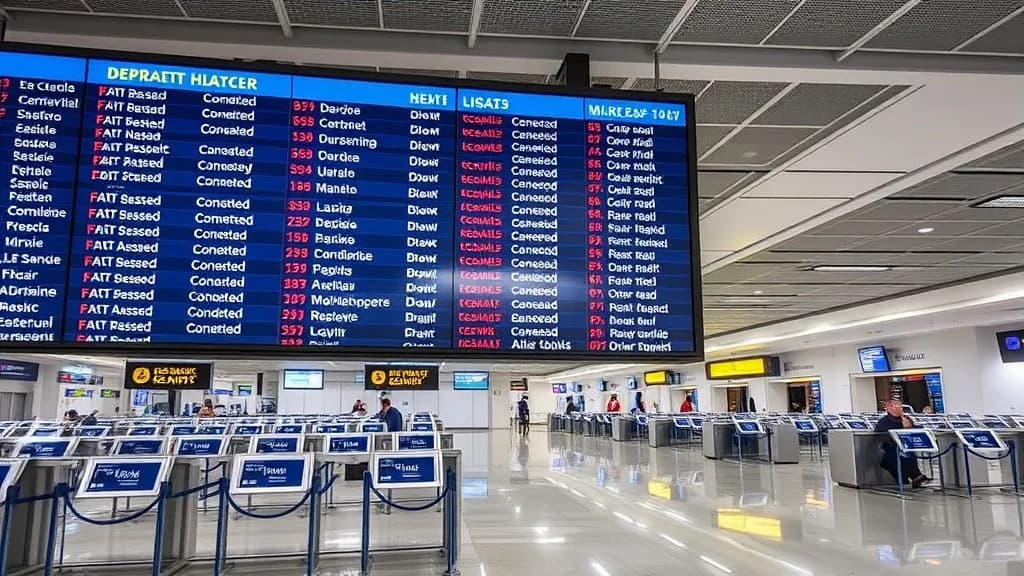
The escalating conflict with Iran has reached Miami International Airport's departure boards, where canceled flights to Dubai and Qatar tell the story of a global aviation crisis unfolding in real time. As security concerns mount across the Middle East, major airlines are grounding operations that connect South Florida to one of the world's most volatile regions.
Secretary of State Marco Rubio addressed the growing crisis Monday, speaking directly to Americans caught in the crossfire of an expanding regional conflict.
I wanted to take this chance to speak directly to Americans who are in the Middle East. At the Department of State, our number one priority is the safety and security of American citizens everywhere in the world.
Rubio is now urging Americans to immediately leave 14 countries in the region as Iranian retaliation targets airports in Persian Gulf countries that have served as host sites for U.S. military operations.
MIA Operations Hit Hard by Regional Crisis
The ripple effects are clearly visible throughout Miami International Airport's international terminal. Qatar Airways counters sit shuttered, while cameras captured workers at Emirates check-in desks beginning to close their operations for the foreseeable future.
El Al has suspended its direct flights between Miami and Tel Aviv through at least Wednesday, a route that has served as a crucial link for South Florida's substantial Jewish community traveling to Israel. The Israeli carrier is now preparing to operate rescue flights to help bring stranded passengers home, with priority given to those with previously canceled tickets.
South Florida Residents Caught in the Crisis
Among those desperately seeking a way home is Aventura resident Scott Wayne, who finds himself trapped in Jerusalem as Israel shut down its airspace Saturday following strikes on Iran.
The feeling is we are all scared and we're on edge. I would like the US government to do something as an American citizen and help the US citizens to get out of Israel, the ones that want to leave.
Wayne described hearing air raid sirens from his hotel room in Jerusalem, a stark reminder of how quickly the situation has deteriorated for American travelers who now find themselves in an active war zone.
Congressional Response from South Florida
U.S. Representative Debbie Wasserman Schultz's office has stepped in to assist constituents caught in the crisis. A spokesperson stated that Wasserman Schultz "is working with anyone who contacts her office to walk them through the step program, work with the State Department and reach out to other embassies or consulates."
The congresswoman is also pushing the State Department to charter flights to help Americans stranded in the region, recognizing that commercial aviation has largely collapsed across the affected areas.
Americans seeking emergency assistance can call +1-202-501-4444 from overseas or 888-407-4747 from the U.S. and Canada.
As the crisis continues to unfold, Miami International Airport serves as both a gateway and a barrier for South Florida residents with connections to the Middle East. The empty counters and canceled flights represent more than travel disruptions – they're a tangible reminder of how global conflicts reach into the heart of our community, affecting families, businesses, and travelers who call South Florida home.
Miami International Airport
Miami International Airport (MIA), owned and operated by the Miami-Dade Aviation Department, stands as America's second-busiest airport for international passenger traffic and the nation's leading gateway for international freight operations. Founded in 1928 when Pan American Airways shifted operations from Key West to Miami, MIA evolved from a modest 116-acre privately operated facility into one of the world's largest and busiest aviation hubs. The airport's transformation began when Pan American Field officially opened on January 9, 1929, with Charles Lindbergh inaugurating service to San Juan, establishing Miami as a pivotal hub for international aviation to the Caribbean, Central America, and South America. By 1949, following the consolidation of the original 36th Street Airport with the Miami Army Airfield, MIA had grown to 2,500 acres and became the world's largest aircraft maintenance and overhaul facility for commercial aviation. The airport's modern era launched on February 1, 1959, when a newly constructed Miami International Airport with five concourses and a centralized terminal—then the world's largest—officially opened at Wilcox Field on 20th Street, handling over four million passengers within its first year of operation. Today, MIA serves as the primary U.S. gateway to Latin America and the Caribbean with extensive operations from American Airlines and countless international carriers, generating billions in economic activity and supporting a multi-billion-dollar capital improvement program to meet growing demand. The airport's strategic position, coupled with its deep-rooted history as a pioneer of international commercial aviation, continues to position Miami as an essential global transportation and commerce hub.
Marco Rubio
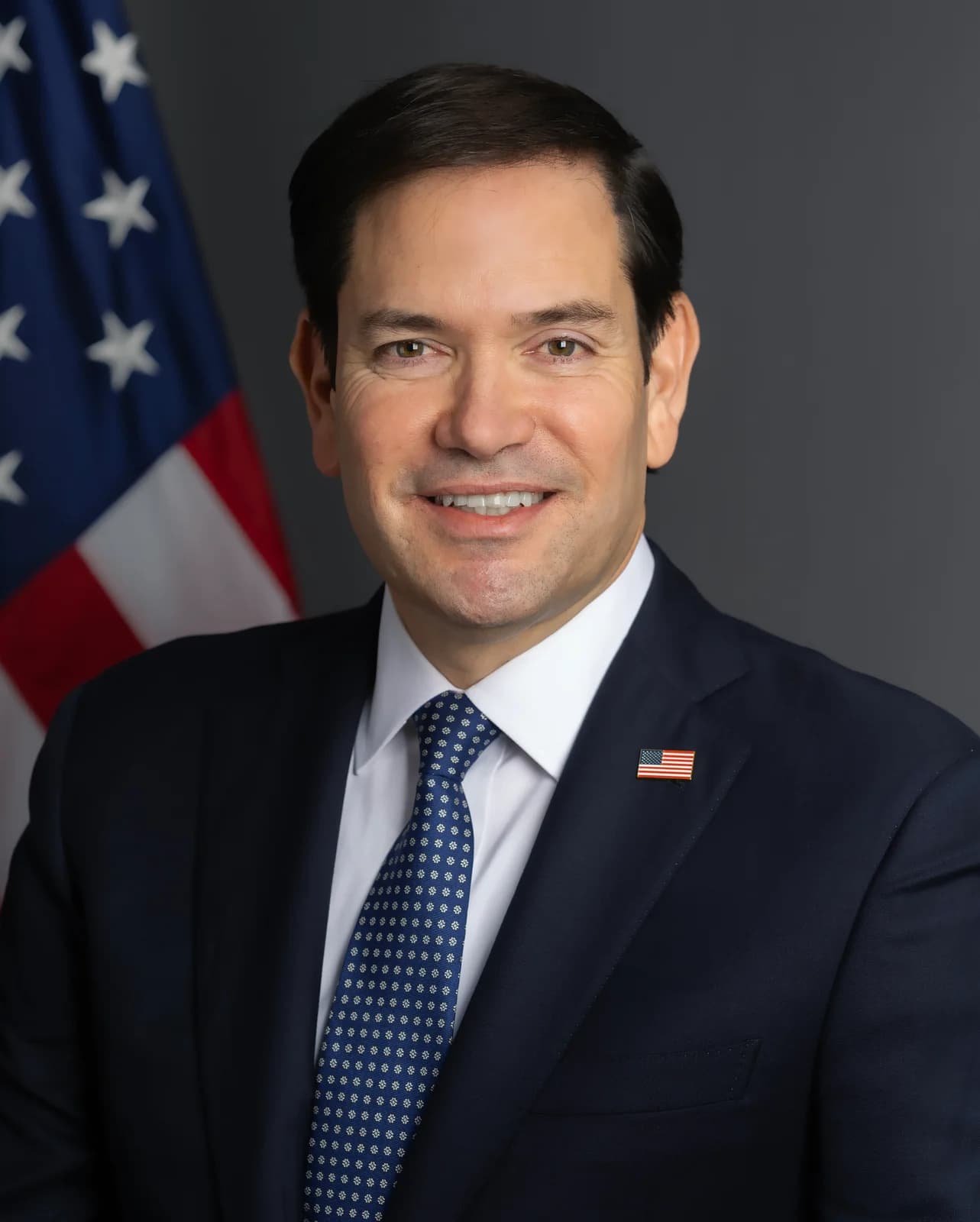
Marco Rubio, the 72nd U.S. Secretary of State, directs U.S. foreign policy with a hawkish focus on Latin America and global security threats following his unanimous Senate confirmation in January 2025.
![[Name]: [Compelling angle or achievement]](/_next/image?url=https%3A%2F%2Fauav6qnhhl3tspqr.public.blob.vercel-storage.com%2Farticles%2F1774034356093-5siaywva4fj.webp&w=3840&q=75)
