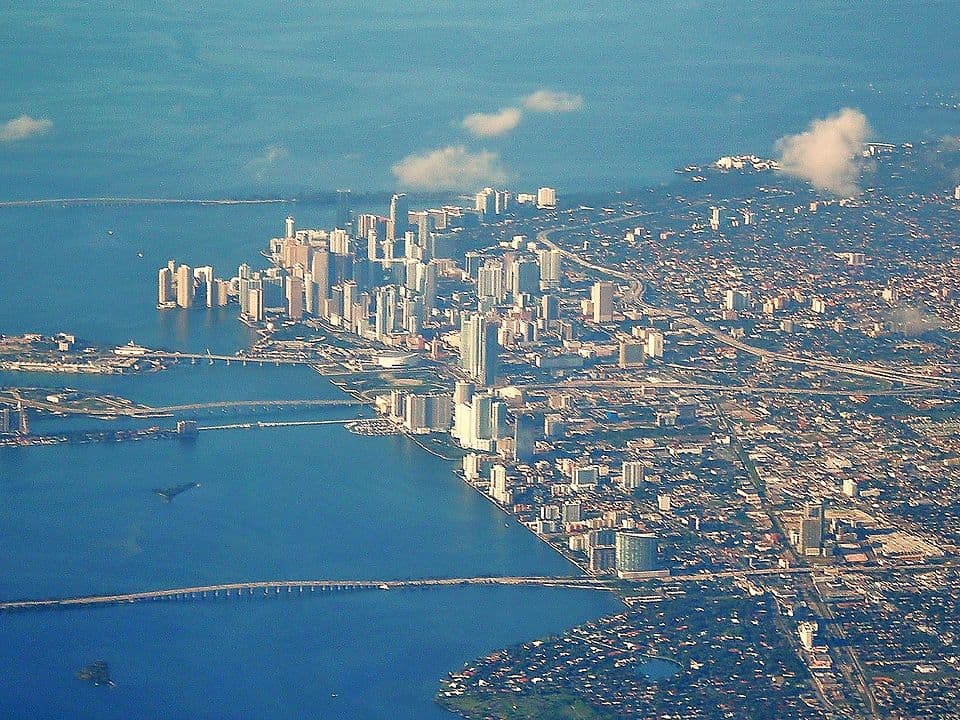
While Miami's Brickell Avenue continues its transformation into a global financial hub, a small Caribbean territory just 150 miles south has quietly assembled one of the world's most powerful concentrations of investment capital. The Cayman Islands now controls investment funds holding approximately $8 trillion in assets, with recent Federal Reserve analysis revealing the territory holds between $1.4 trillion and $1.85 trillion in U.S. Treasury debt alone.
This staggering figure makes the Cayman Islands potentially the largest foreign holder of U.S. government debt, surpassing even China, which cut its holdings to the lowest level since 2008. For Miami's growing hedge fund community and Latin American wealth managers, the implications are profound—the Caribbean financial center they've long used for offshore structuring has become a global economic force.
The Rise of an Offshore Giant
The transformation began in earnest after the territory passed its Mutual Funds Law in 1993 amid the 1990s hedge fund boom. Today, the Cayman Islands is home to roughly three-quarters of the world's offshore hedge funds, drawn by flexible regulation and zero direct taxes on individuals, corporate profits, or capital gains.
Many of these funds have embraced sophisticated "basis trades," borrowing heavily to profit from small price gaps between U.S. Treasury bonds and their future equivalents. According to Federal Reserve analysis, nearly 40 percent of new treasury notes and bonds were purchased in the Cayman Islands after 2022. The strategy has grown so large and opaque that it has triggered a Federal Reserve investigation.
The Cayman Islands officially held $427 billion in U.S. Treasuries as of November 2025, ranking it as the sixth-largest foreign holder. However, Federal Reserve analysis suggests the true figure is much higher due to complex offshore structuring.
From Eurodollar Hub to Financial Powerhouse
The territory's financial dominance traces back to the 1960s, when it emerged as a center for Eurodollars—dollars held by European banks trading outside U.S. regulations. Local lawmakers strategically crafted financial laws to attract international businesses, creating a legal framework based on English common law that offered clear rules and independent courts.
According to a University of Alabama working paper, the Cayman Islands' success stemmed from a "collaborative policymaking process that involved local leaders, expatriate professionals, and British officials," combined with an ability to embrace emerging financial trends.
The Notorious Ugland House
Perhaps nowhere is the concentration of offshore wealth more visible than at Ugland House, a modest five-story building that serves as the registered address for approximately 40,000 entities. Among the more than 120,000 companies registered in the Cayman Islands as of 2025, thousands operate from this single location.
The building's tenants have included high-profile entities like the parent company of Theleme Partners LLP, a hedge fund linked to former UK Prime Minister Rishi Sunak. As the Good Law Project noted, "The small office is the registered home to approximately 40,000 entities."
Cryptocurrency Connections and Regulatory Scrutiny
The territory's role in global finance gained additional scrutiny during the 2022 FTX cryptocurrency exchange bankruptcy, which became one of the largest financial frauds of the decade. Court filings revealed that more than a fifth of FTX's registered customer accounts were from the Cayman Islands—greater than any other jurisdiction—highlighting the territory's central role in digital asset structuring.
FTX
FTX was a leading centralized cryptocurrency exchange founded in 2019 by Sam Bankman-Fried, offering advanced derivatives trading including futures, options, and tokenized stocks, achieving a peak valuation of $32 billion. Despite its Bahamas headquarters, FTX maintained strong Miami and South Florida ties through the founder's presence and a high-profile naming rights deal for the downtown Miami arena. The exchange collapsed in November 2022 amid fraud revelations and an $8 billion customer funds shortfall, but its bankruptcy estate has recovered over $16 billion, enabling 98% creditor repayments at 119% of claims by late 2024.
Despite having its own elected government, key powers in the Cayman Islands remain with the United Kingdom, with final appeals heard in London and a British-appointed governor overseeing security and foreign affairs.
Implications for Miami's Financial Future
For Miami's burgeoning financial sector, the Cayman Islands' emergence as a $8 trillion financial hub represents both opportunity and competition. As hedge funds and family offices continue relocating to South Florida, many maintain offshore structures in the Caribbean territory, creating a symbiotic relationship between the two financial centers.
The Federal Reserve's ongoing investigation into basis trades and the territory's opaque financial structures could reshape how Miami-based funds structure their offshore operations, potentially accelerating the shift toward greater transparency in international finance.