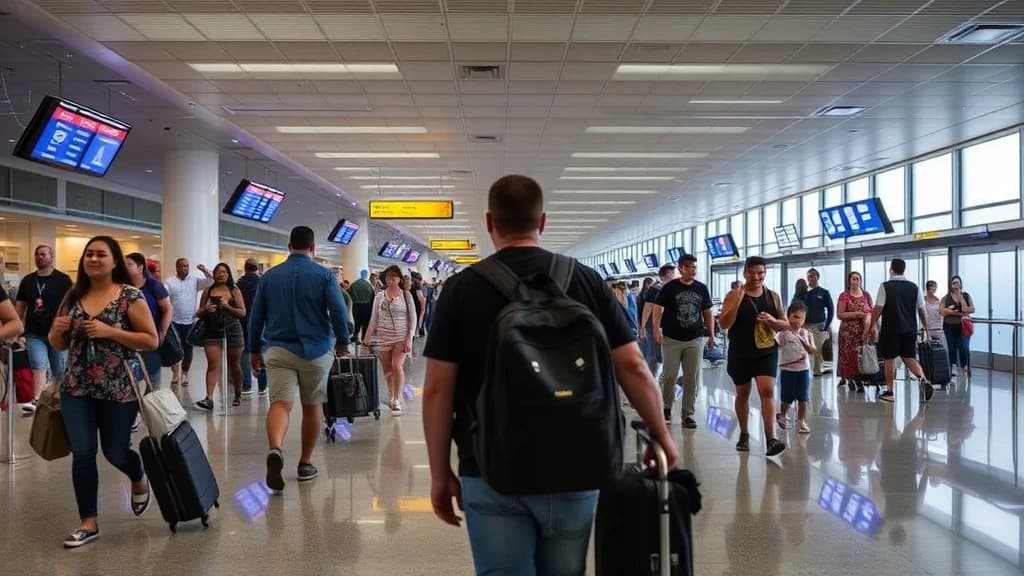
The usually bustling terminals of Miami International Airport (MIA) and Fort Lauderdale-Hollywood International Airport (FLL) have transformed into scenes of frustration and exhaustion as thousands of spring break travelers find themselves caught in a perfect storm of operational challenges. The convergence of a federal government shutdown and the annual spring break rush has created what aviation experts are calling one of the most severe travel disruptions in South Florida's recent history.
At MIA, serpentine security lines stretched for what seemed like miles, with wait times extending beyond three hours during peak periods. Maria Gonzalez, a Miami Beach resident traveling with her family to Cancun, described the scene as 'absolute chaos.' Her 10 a.m. flight was delayed until 4 p.m., forcing the family to navigate the overcrowded terminal with restless children and mounting anxiety about their vacation plans.
TSA Staffing Shortages Compound Delays
The government shutdown has significantly impacted Transportation Security Administration (TSA) operations, with many agents calling in sick or working without pay. This staffing shortage has created bottlenecks at security checkpoints just as spring break travel reaches its annual peak. Airport officials report that several security lanes have been forced to close intermittently, further exacerbating wait times.
We're dealing with a double whammy here – reduced federal staffing right when we need all hands on deck for spring break season.
The situation at Fort Lauderdale-Hollywood International hasn't fared much better. Terminal 1 resembled a refugee camp by midday Tuesday, with travelers sprawled across every available seat and floor space. The airport's food courts struggled to keep up with demand, with several vendors running out of basic items by early afternoon.
Flight Cancellations Ripple Across Caribbean Routes
Airlines have been forced to cancel dozens of flights, particularly those bound for popular Caribbean destinations like Jamaica, the Bahamas, and various Mexican resort cities. American Airlines, which maintains a major hub at MIA, reported canceling approximately 15% of its scheduled departures on Tuesday alone. The cancellations have created a domino effect, with rebooking passengers filling flights scheduled for later in the week.
Travelers are advised to arrive at least three hours early for domestic flights and four hours for international departures during the ongoing disruptions.
Local hotels near both airports have seen an unexpected surge in bookings from stranded passengers. The Hampton Inn & Suites near MIA reported being fully booked by Tuesday evening, with many guests extending stays due to rebooking complications. Hotel manager Carlos Rivera noted that they've implemented special rates for affected travelers and are coordinating with airlines to accommodate passengers.
Economic Impact Spreads Beyond Airports
The travel disruptions are beginning to impact South Florida's broader tourism economy. Rental car agencies are dealing with inventory shortages as travelers extend their stays, while rideshare prices have surged due to increased demand from airport trips. Local restaurants and attractions that depend on smooth tourist arrivals are also feeling the effects of the delays.
Airport officials are working closely with federal agencies to address staffing shortages and have implemented temporary measures to manage crowd flow. Additional volunteers and customer service representatives have been deployed to assist travelers, while both MIA and FLL have extended operating hours for restaurants and shops to serve stranded passengers.
As negotiations continue in Washington to end the government shutdown, South Florida travelers are urged to monitor flight statuses closely, consider travel insurance options, and prepare for extended wait times. The situation serves as a stark reminder of how federal policies can directly impact local communities, particularly in a tourism-dependent region like South Florida.
Miami International Airport
Miami International Airport (MIA), owned and operated by the Miami-Dade Aviation Department, stands as America's second-busiest airport for international passenger traffic and the nation's leading gateway for international freight operations. Founded in 1928 when Pan American Airways shifted operations from Key West to Miami, MIA evolved from a modest 116-acre privately operated facility into one of the world's largest and busiest aviation hubs. The airport's transformation began when Pan American Field officially opened on January 9, 1929, with Charles Lindbergh inaugurating service to San Juan, establishing Miami as a pivotal hub for international aviation to the Caribbean, Central America, and South America. By 1949, following the consolidation of the original 36th Street Airport with the Miami Army Airfield, MIA had grown to 2,500 acres and became the world's largest aircraft maintenance and overhaul facility for commercial aviation. The airport's modern era launched on February 1, 1959, when a newly constructed Miami International Airport with five concourses and a centralized terminal—then the world's largest—officially opened at Wilcox Field on 20th Street, handling over four million passengers within its first year of operation. Today, MIA serves as the primary U.S. gateway to Latin America and the Caribbean with extensive operations from American Airlines and countless international carriers, generating billions in economic activity and supporting a multi-billion-dollar capital improvement program to meet growing demand. The airport's strategic position, coupled with its deep-rooted history as a pioneer of international commercial aviation, continues to position Miami as an essential global transportation and commerce hub.
Hampton Inn & Suites
American Airlines
Transportation Security Administration