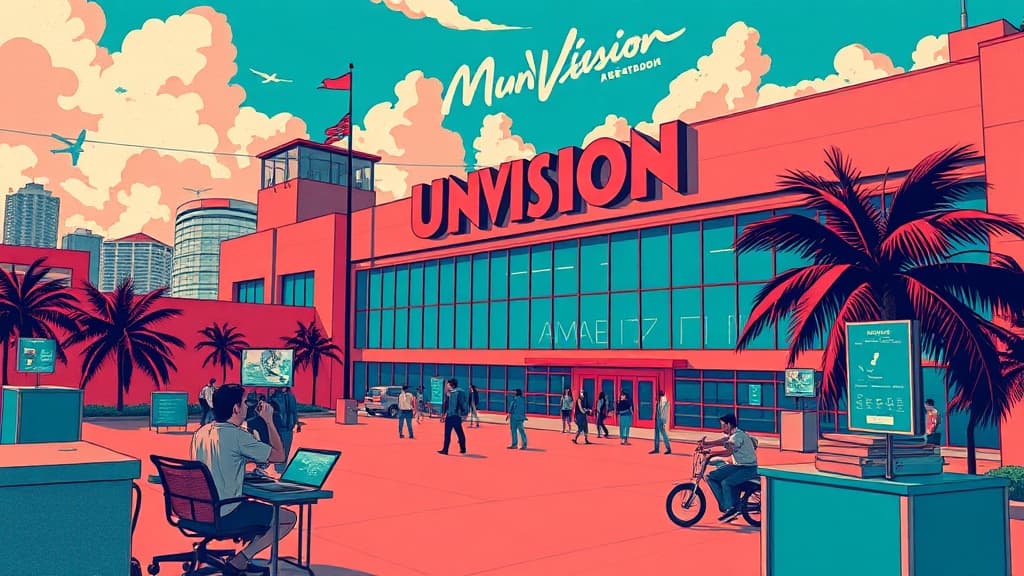
In a transformed warehouse complex in Doral, just minutes from Miami International Airport, the future of Spanish-language media unfolds daily. Here, Univision operates its sprawling Newsport production facility—a 150,000-square-foot powerhouse that has helped cement Miami's status as the undisputed capital of Hispanic broadcasting in America.

Univision
TelevisaUnivision is the world's leading Spanish-language media company, delivering top-rated news, sports, and entertainment content across broadcast networks like Univision and UniMás, cable channels, digital platforms including ViX, and audio networks to over 100 million Spanish speakers daily. Headquartered in New York City and Mexico City, the company leverages the largest owned Spanish-language content library and prolific production capabilities, with major facilities in Doral, Florida, establishing Miami as a key hub for South Florida content creation and operations. Notable achievements include rebranding Noticias Univision to N+ Univision in 2026, solidifying its dominance in U.S. Hispanic news with unmatched coverage of events like presidential inaugurations and hurricanes.
View full profileWhat started as a 95,000-square-foot warehouse has evolved into something far more ambitious. According to HLW, the architectural firm behind the transformation, Univision added a 60,000-square-foot mezzanine, three state-of-the-art sound studios, a glass-enclosed newsroom, and open collaborative spaces designed specifically to house Fusion, an English-language news network targeting young Hispanics.
The Spanish-Language Media Empire
Headquartered between Miami and Midtown Manhattan, Univision has grown into something unprecedented: the world's leading Spanish-language media company. According to Business Wire, the company employs over 3,700 people under CEO Daniel Alegre and owns 65 television stations across key U.S. Hispanic markets, including Puerto Rico.
The numbers tell a remarkable growth story. During the 2019-2020 broadcast season, Univision's portfolio—including Univision, UniMás, Galavisión, and TUDN—experienced the fastest growth among all U.S. media companies, according to Business Wire. The network saw a 12% increase in average audience and 16% growth in primetime among Adults 18-49, dramatically outperforming major competitors.
While Fox managed only 4% growth, Disney-ABC declined 11%, NBCUniversal dropped 16%, and ViacomCBS fell 19% during the same period.
Miami: The Strategic Choice
Univision's significant Miami presence isn't coincidental—it's strategic. The city's position as the gateway to Latin America, combined with its massive Hispanic population, makes it the natural headquarters for Spanish-language media operations targeting both domestic and international audiences.
The Doral facility represents more than just studio space. According to HLW, the design emphasizes 'main streets and avenues' for improved wayfinding and circulation, creating an environment that fosters collaboration between different divisions. This thoughtful approach to workspace design reflects Univision's understanding that great content emerges from great collaboration.
Digital Dominance and Innovation
Beyond traditional television, Univision has established digital supremacy in the Hispanic market. According to Business Wire, Univision.com ranks as the top Spanish-language website with 20 million monthly unique visitors, demonstrating the company's successful transition from broadcast-only to multimedia powerhouse.
This digital success stems partly from lessons learned during Univision's evolution. As former Univision president Joaquin F. Blaya noted in a 2017 interview, the early days of Spanish-language television faced significant challenges. Blaya recalled advertisers saying, 'I'd rather put people at you in a banana boat and send you back to where you came from,' highlighting how far the industry has progressed.
Historical Milestones and Miami Moments
Univision's Miami connection runs deep through significant historical moments. In 1993, the company hosted the first Spanish-language U.S. presidential debate at the University of Miami, according to Wikipedia, marking a watershed moment for Hispanic political engagement and media representation.
- 1993: First Spanish-language U.S. presidential debate held at University of Miami
- 1998: Partnership with HLW architectural firm begins for facility design
- 2008: Univision Music Group sold to Universal Music Group, forming Universal Music Latin Entertainment
- 2019-2020: Record-breaking growth outperforming all major U.S. media competitors
The Leadership Evolution
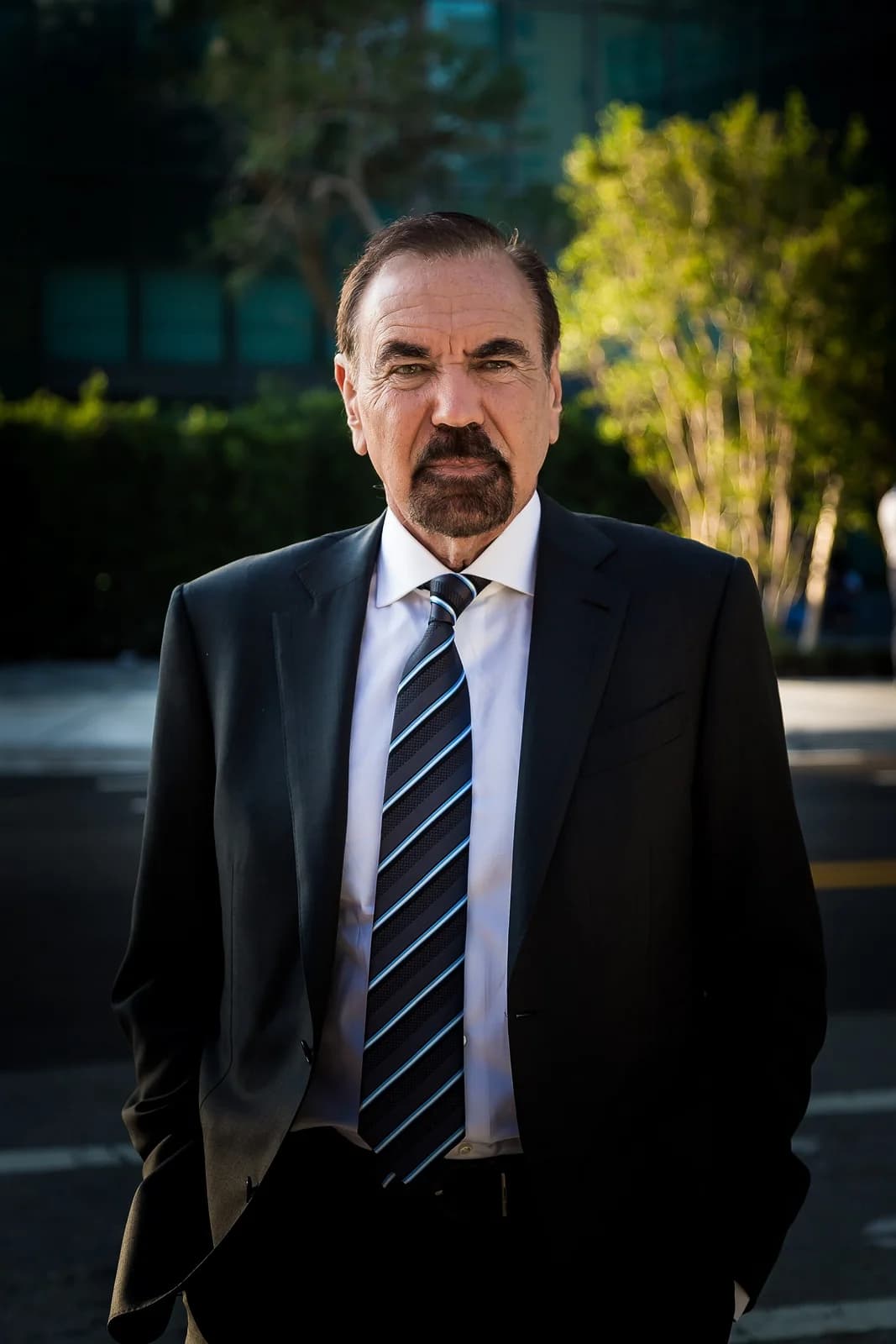
The company's growth reflects bold leadership decisions throughout its history. In 1993, owner Jerry Perenchio appointed 27-year-old Miguel Banojian to lead operations, particularly focusing on turning around KMEX-Channel 34 in Los Angeles, which generated 40% of Univision's revenue at the time of acquisition, according to Wikipedia.
This willingness to invest in young talent and take calculated risks has remained a hallmark of Univision's approach, evident in projects like the innovative Fusion network and the company's aggressive digital expansion.
Miami's Media Ecosystem Impact
Univision's substantial Miami presence has created a ripple effect throughout South Florida's media landscape. The company's operations attract related businesses in production, advertising, and talent representation, while its workforce of thousands contributes significantly to the local economy.
The Doral facility serves as more than a production hub—it's a talent magnet. Journalists, producers, technicians, and creative professionals from across Latin America view Miami as the place to build careers in Spanish-language media, partly because of Univision's commanding presence.
Univision's success has helped establish Miami as a legitimate alternative to Los Angeles and New York for media professionals, particularly those focused on Hispanic markets.
The Road Ahead
As America's Hispanic population continues growing, Univision's Miami operations are positioned to expand further. The company's record-breaking growth during the 2019-2020 season, combined with its digital dominance, suggests that the Doral facility may see additional investment and expansion in coming years.
The transformation from warehouse to media empire reflects a larger story about Miami's evolution into a global media capital. What Univision has built in Doral isn't just a production facility—it's the foundation of Spanish-language media's American future, with Miami serving as its beating heart.